


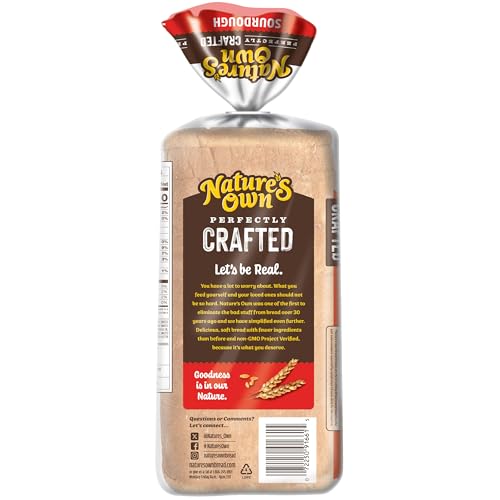

Nature’s Promise Sourdough Bread
Our sourdough is crafted using traditional slow-fermentation methods that develop deep, complex flavor in every slice. We use only unbleached wheat flour, water, sea salt, and live starter culture—no commercial yeast, no preservatives, and no artificial additives.
The result is a tender crumb with that signature sourdough tang, plus a golden crust that crisps beautifully when toasted. Each loaf is baked fresh daily in small batches, so you get bakery-quality bread with the convenience of your local grocery aisle. Perfect for morning toast, hearty sandwiches, or served alongside dinner.
What makes this loaf special
Ingredients & fermentation
Nature’s Promise sourdough starts with a live starter culture we maintain and feed daily. This natural leavening agent—a mixture of flour and water colonized by wild yeast and beneficial bacteria—is what gives sourdough its characteristic tang and chewy texture.
We blend the starter with unbleached wheat flour, filtered water, and a touch of sea salt, then allow the dough to ferment slowly over 12 to 18 hours. This extended fermentation breaks down some of the gluten and starches, making the bread easier to digest than standard yeasted loaves. It also develops those deep, slightly acidic notes you expect from authentic sourdough.
Texture & crust
Crumb structure
Slice into a Nature’s Promise sourdough loaf and you’ll find an open, airy crumb with irregular holes—the hallmark of proper fermentation. The interior stays soft and tender, with just enough chew to hold up to thick spreads or layered sandwich fillings.
Crust characteristics
Our baking process creates a golden-brown crust that crackles when you press it fresh from the bag. Toast a slice and that crust turns beautifully crisp, adding a satisfying contrast to the pillowy interior. The crust also carries much of the sourdough’s nutty, caramelized flavor, so don’t trim it away—it’s one of the best parts of the loaf.
Storage & freshness
Because Nature’s Promise sourdough contains no preservatives, proper storage is key to maintaining peak flavor and texture. Keep the loaf in its original packaging or transfer it to a bread box at room temperature for up to five days. Avoid refrigerating sourdough—it speeds up staling and turns the crumb gummy.
If you won’t finish the loaf within a week, slice it first and freeze individual portions in a resealable bag. Frozen slices toast beautifully straight from the freezer, so you can enjoy fresh-tasting sourdough whenever you need it. Just pop a frozen slice in the toaster for an extra minute or two, and it will crisp up perfectly.
More from our bakery selection



Rated 4.8 by verified buyers


Common questions about our sourdough
Our sourdough is leavened with a live starter culture made from wild yeast and beneficial bacteria, not commercial baker’s yeast. The starter is a natural fermentation agent that gives the bread its signature tang and texture. This traditional method takes longer than using packaged yeast, but it develops deeper flavor and creates a loaf that many people find easier to digest.
Nature’s Promise sourdough will stay fresh at room temperature for five to seven days when stored in its original packaging or a bread box. Because we don’t use preservatives, we recommend freezing any slices you won’t eat within that window. Frozen slices toast beautifully and taste just as good as fresh bread.
No, this sourdough is made with unbleached wheat flour and contains gluten. While the slow fermentation process breaks down some gluten and may make the bread easier to digest for people with mild sensitivities, it is not safe for anyone with celiac disease or severe gluten intolerance.
Absolutely. The sturdy crumb and slight tang make this sourdough excellent for French toast. Cut thick slices, soak them in your egg mixture, and cook until golden. The bread holds its shape well and adds a subtle complexity to the dish that you won’t get from standard sandwich bread.
Keep the loaf in its original bag or transfer it to a bread box at room temperature. Avoid refrigerating sourdough, as that accelerates staling and makes the crumb gummy. If you need to store it longer than a week, slice the loaf and freeze individual portions in a resealable bag. You can toast frozen slices directly without thawing.
Our sourdough has a balanced tang—noticeable but not overpowering. The flavor is more complex and slightly acidic compared to standard bread, but it won’t pucker your mouth. If you prefer a milder taste, toast the bread lightly, which mellows the sourness and brings out nutty, caramelized notes.
Each loaf contains approximately 20 slices, depending on how thick you cut them. The bread is sturdy enough to slice thin for sandwiches or thick for toast and French toast. We recommend using a serrated bread knife for clean, even cuts.